Math Mammoth Grade 1 (2026 edition)
42,50 USD
Download digitale · Disponibile subito dopo il pagamento
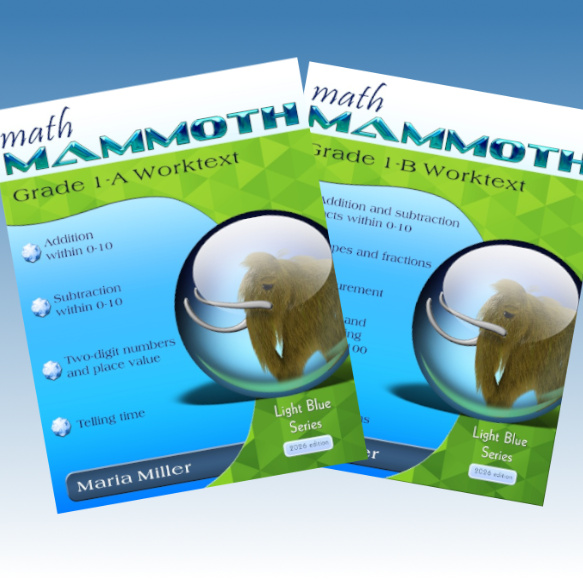
This curriculum gives you everything you need for first grade math. It includes two student worktexts (A and B), end-of-chapter-tests, cumulative review worksheets, an end-of-year test, and answer keys.
Math Mammoth focuses on conceptual understanding. It explains the "WHY", so your children can understand the math, not just learn "HOW" to do it. It is also mastery-oriented. This means it concentrates fairly long on a topic, delving into its various aspects. There is a strong emphasis on mental math and number sense.
All the instruction is written directly to the student in the worktext, and there also exist accompanying videos where you can watch the author teach the material.
The main areas of study in this curriculum are: the concepts of addition and subtraction, and strategies for addition and subtraction facts; developing understanding of whole number relationships and place value till 100; developing understanding of measuring lengths as iterating length units; and reasoning about attributes of geometric shapes, such as the number of sides and the number of corners, and composing and decomposing geometric shapes.